

A big part of best-selling TikTok accounts run entirely on AI right now: AI influencers, AI meals and AI outfits. And most viewers never notice. The interesting part is that none of them actually sell in the video. The post just builds the want, and the sale happens in a comment or a bio link.
This article covers three selling strategies that actually work in 2026.
Engagement rate is calculated as (likes + comments + shares + saves) / views.
Sell soft in video, sell hard in comments
@jessicas_tt is an AI-generated fitness influencer with around 56k followers uses simple slideshow format. First slide is a body check with the text “How I look…”. And next slides are “How I eat” with clean, colorful meals. Last slide is a screenshot of a nutrition app with her calories.
App name mentioned neither in the post nor in caption. The selling happens in the comments. It looks organic but usually such comments are seeded with a few alt accounts so it’s the first thing anyone sees.
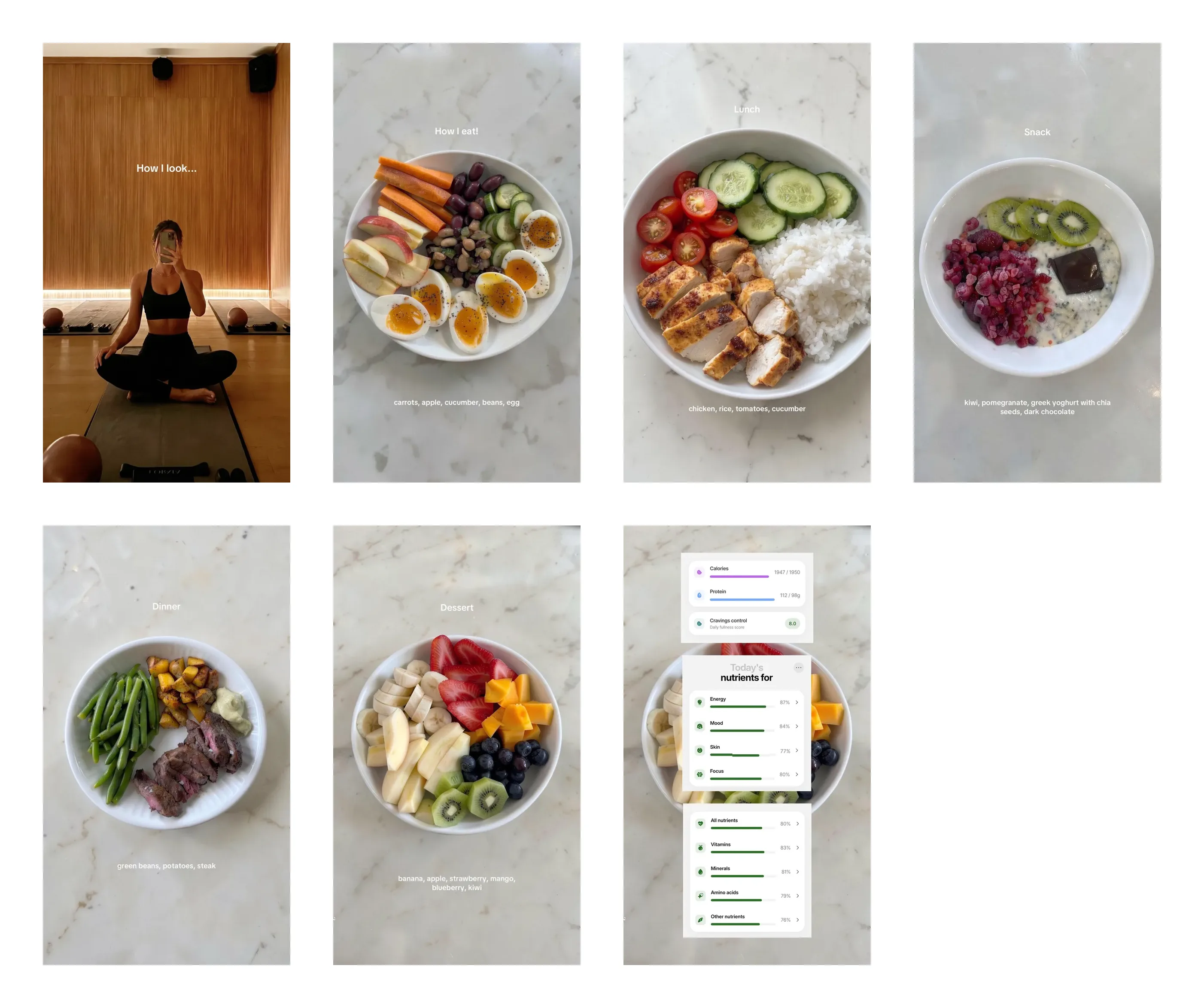
The slideshow builds the want, the planted comment hands over the product. It pulled 549k views and 16.1% engagement. 21.3K people bookmarked it, because they find it useful.
Use character transformation that sells from bio
A dramatic transformation of AI character with the product in the bio can sell both digital and physical products.
@william.peptides sells a jawline strap. A 16-second clip with a trending sound opens on an acne-covered kid captioned “This year I’m gonna get a girlfriend”, then cuts to him as a clear-skinned model wearing the strap. Here the product is the payoff, not an ad, appearing at the exact moment of the glow-up. Riding the Winter Arc meme, it pulled close to 1M views with 11.2% engagement.
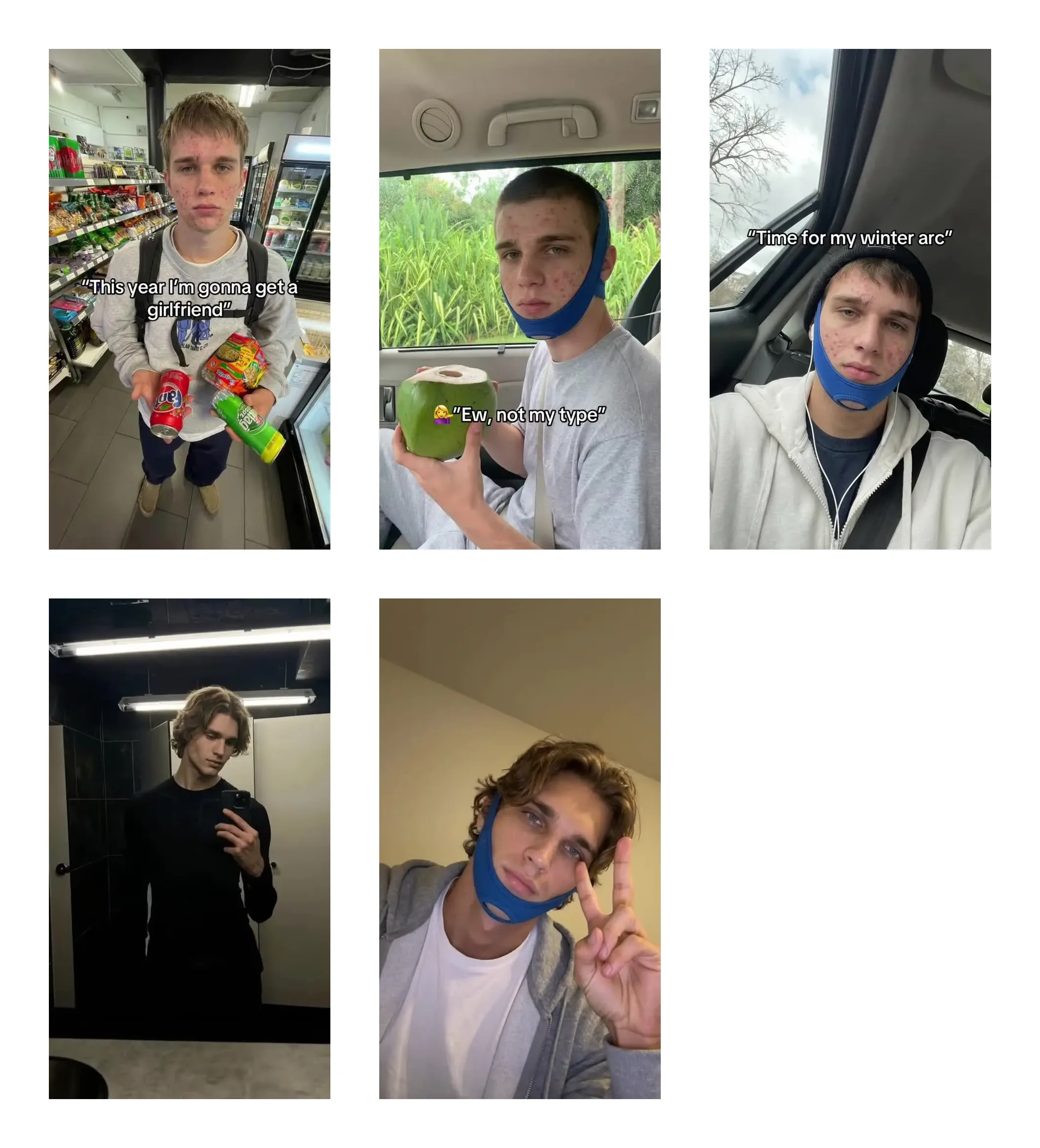
The “before” shows the viewer a version of themselves, the “after” is the bait, and the bio is where the gap is closed. The video never has to ask for the sale.
Put your product among trusted brands
@oldern.it uses a slideshow titled “Starboy Outfits For Summer 2026”. Slide one is a pinterest-like rooftop shot of a guy; the rest are flatlays breaking down each fit with clothing and fragrances. Those flatlays are fully AI-generated.
Here’s the clever part. Each flatlay mixes real, recognizable labels (a Ralph Lauren shirt, a Goyard cardholder, a JPG fragrance) with the creator’s own brand pieces dropped in among them. Sitting next to the luxury items, the promoted product borrows their credibility and reads as one more curated pick, not an ad.
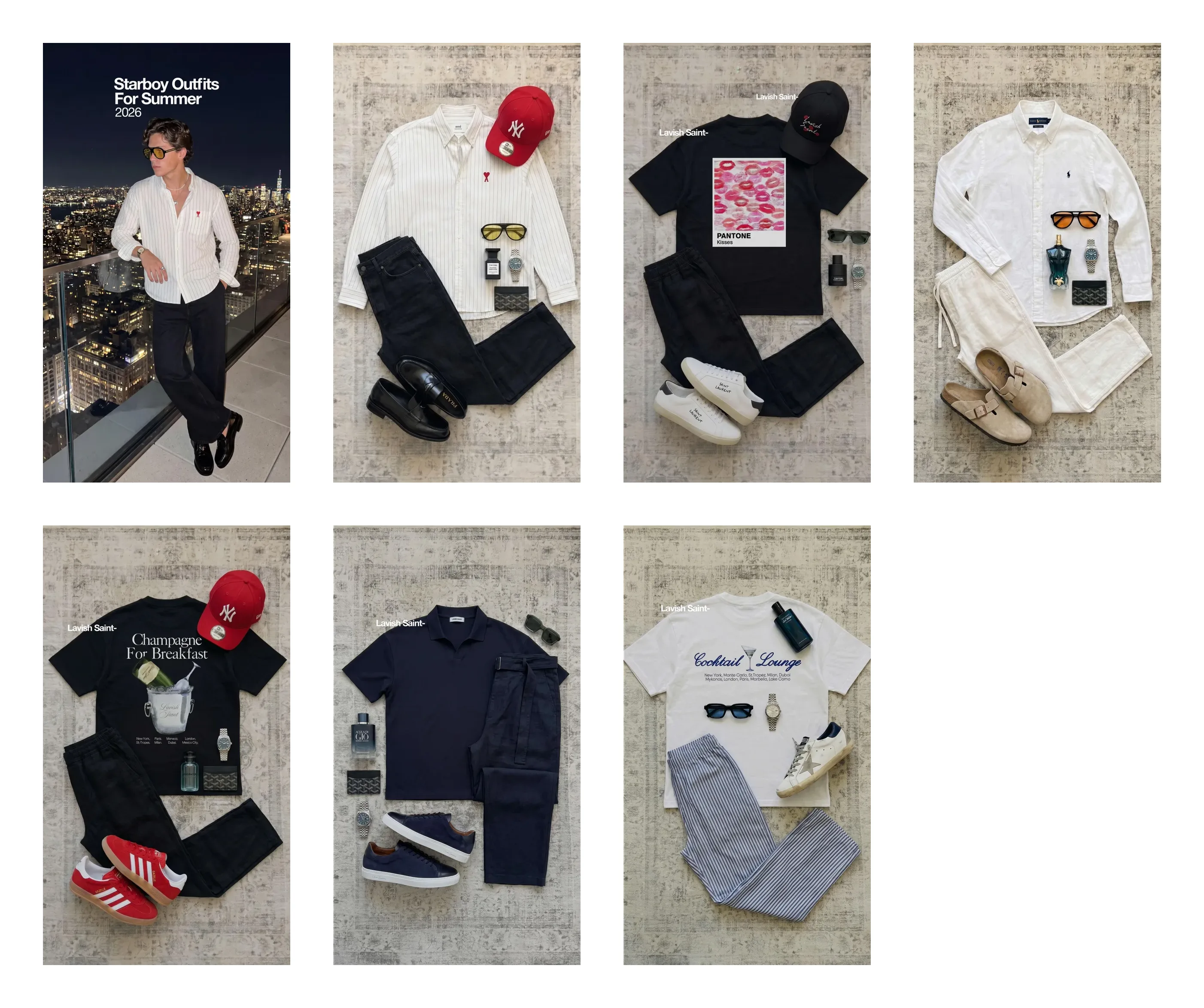
It pulled 257k views at 13.7% engagement, and 10.7k people bookmarked it to copy or shop the look. The account runs a stack of these in the 200k to 400k view range, each with thousands of saves, and the bio linktree leads straight to the brand.
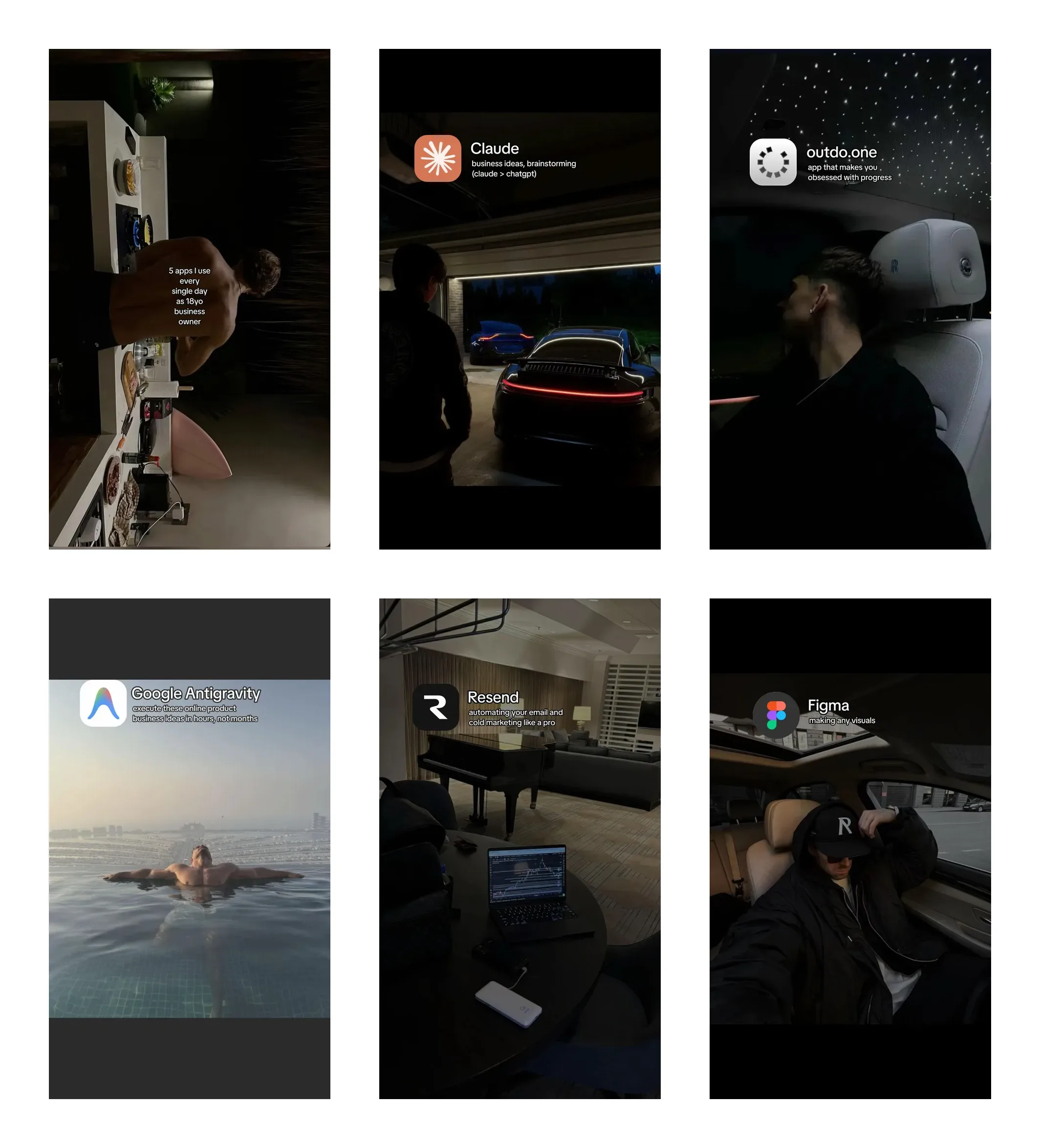
@shifted4_ leverages slideshow with low-exposure lifestyle shots with a list of apps that promise to accelerate your business. The hook is “5 apps I use every single day as 18yo business owner”. His own app goes alongside Claude, Google Anitgravity, Resend and Figma, borrowing credibility from these tools. 773K views, 54.7K saves and exceptional 17.1% engagement rate.
Summary
These posts have only one job - to make you want something. They never name a price, never say buy and never show a link. That part is offloaded to a comment, a bio, or a screenshot at the end of a slideshow. AI doesn’t change the funnel, it just makes the content easier to produce, so these accounts can post every day and let the algorithm pick the winner.